Japanese Tea Sets: What Goes in One and How to Choose
Taka KanekoA Japanese tea set is a smaller thing than most people picture. There is no tray of twelve cups and no matching sugar bowl. The working set in a Japanese home is a pot and two or three cups, sized for the tea it will brew, and everything else is optional. This guide explains what goes in one, how the pieces are sized, which set suits which tea, and what to look for when you buy one for yourself or as a gift.
It is written by Taka Kaneko, founder of EdoMatcha and one of only two Japanese Tea Instructors in Australia certified by the NPO Nihoncha Instructor Association. The sets below are the ones he chose for the shop.
The Three Parts of a Set
The pot. For leaf tea, a kyusu: the side-handled Japanese teapot with a built-in strainer, often from Tokoname, sized for one to three people. A dobin is the top-handled cousin, larger, and the traditional choice for hōjicha and bancha where you brew a big pot with boiling water. A shiboridashi is the lidded, handleless pot for the delicate shaded teas, held between the fingers and poured through a narrow gap.
The cups. Yunomi, the everyday Japanese tea cup, usually without a handle. Two things matter more than the pattern. A pale interior lets you read the colour of the tea, which tells you its strength and freshness at a glance; the course texts recommend white porcelain for sencha and gyokuro for exactly that reason. And the shape: wide and low for sencha and gyokuro, where you want the aroma and the tea cools quickly to drinking temperature; taller and thicker for hōjicha and bancha, which are poured hot.
The cooler, if you want one. A yuzamashi is a small spouted bowl for bringing boiled water down to the temperature the tea needs. It is the piece most beginners skip, and it is the piece that most improves sencha and gyokuro, because the difference between 70°C and boiling is the difference between sweet and bitter. Two cups will do the same job if you pour the water between them; the yuzamashi just does it more gracefully.
Sizes That Work
Our workshop advice is that a pot of about 250 ml is the sweet spot for two or three people drinking sencha, because Japanese tea is brewed in small amounts and re-steeped rather than made in one large pot. Gyokuro wants smaller still: a very small cup, a few sips, and a second and third steep. Hōjicha and bancha go the other way. The course texts pair them with a large dobin and a 200 ml cup, because you brew them with boiling water in one go and drink them freely.
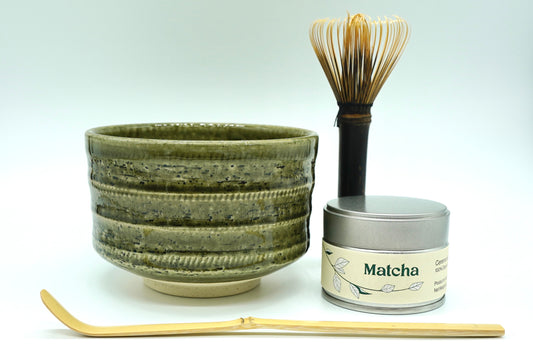
So the size of the set follows the tea. A set built around a 320 ml kyusu and 160 ml cups is a sencha set for two. A 500 ml dobin with 130 ml cups is a pot you can share around a table. A matcha set is a different object altogether: a bowl, a whisk and a scoop, with no pot at all.
Four Sets, Four Uses
For sencha, every day. The Rikyu Nezumi Japanese Tea Set from the Tousen kiln in Tokoname: a 320 ml kyusu and two 160 ml yunomi in the same unglazed grey-green clay, the colour named after the tea master Sen no Rikyū. Pot and lid carry biri, the chatter pattern Tokoname potters cut with a springing blade while the piece turns, so the surface catches the light in fine ridges. Boxed, which makes it the easiest gift on this page.
For a table. The Dragon Japanese Tea Set from Hasami in Nagasaki: a 500 ml dobin in pale blue-white porcelain with a woven top handle and a removable mesh infuser, and two 130 ml sencha cups, all three carrying the same blue dragon. Porcelain stays neutral, so it suits every tea, and the size suits a pot shared with guests.
For gyokuro and the quiet teas. The Sazanami Shiboridashi Japanese Tea Set by Gyokko in Tokoname: a shiboridashi and two matching yunomi in shudei clay, the whole surface pressed by hand into fine ripples. A shiboridashi holds little and pours slowly, which is the point with a tea brewed at 50°C for two and a half minutes.
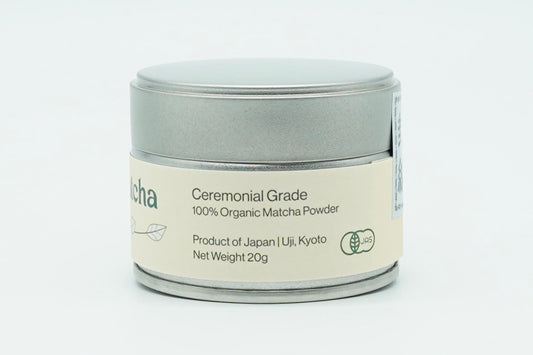
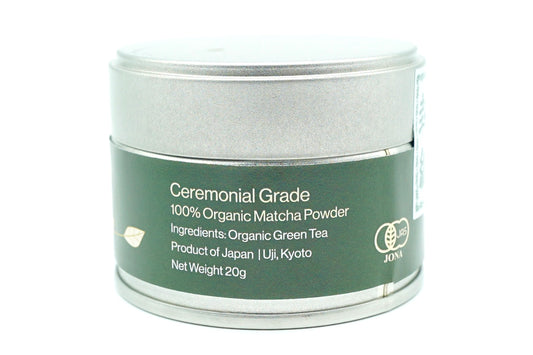
For matcha. The Organic Matcha Ceremony Kit: a tin of Kyoto, Kagoshima or SEN matcha, a chawan of your choice and a Takayama chasen, with a whisk holder alongside the standard chasen. The chasen is included in every price. Beside it, the Artichoke Japanese Tea Set from Mino pairs the Artichoke chawan with two matching yunomi in the same faceted celadon glaze, for a household that drinks both matcha and leaf tea.
Buying a Set as a Gift
Three questions decide it. Which tea will they drink most: sencha, hōjicha or matcha? How many people usually sit down: one, two or a table? And do they already own a pot? If they do, a pair of cups or a yuzamashi completes what they have, and a second pot sits in a cupboard. Add a bag of the tea the set was made for, and the gift is ready to use the day it arrives.
Looking After It
Unglazed Tokoname clay is porous and takes on the tea over time, so keep one pot to green tea and rinse it with hot water rather than soap. Porcelain is neutral and can be washed normally. Mesh infusers come out for cleaning; ceramic strainers just need a rinse and a shake. Dry pots with the lid off.
Keep Reading
- Kyusu: How to Choose a Japanese Teapot
- Know Your Chawan: How to Choose a Japanese Matcha Bowl
- All Japanese tea sets and Japanese teapots, shipped Australia-wide and worldwide, with free Australian shipping over $100.
- How to Make Matcha: The Ratio, the Temperature and the Technique
- Matcha Whisk Guide: How to Choose, Use and Care for a Chasen