Kyusu: How to Choose a Japanese Teapot
Taka KanekoA kyusu is a Japanese teapot with the handle on the side. That is the part everyone notices first, and it is the least important thing about it. What actually decides whether a pot makes good tea is its size, what it is made of, and the strainer inside it. Get those three right and an inexpensive pot will out-brew a beautiful one. This guide covers all three, plus how to look after a kyusu so it lasts a lifetime.
It is written by Taka Kaneko, founder of EdoMatcha and one of only two Japanese Tea Instructors in Australia certified by the NPO Nihoncha Instructor Association.
Start With Size, and Buy Smaller Than You Think
There is a Japanese saying about teapots that inverts the usual shopping instinct: dai wa shou wo kanenai, "big does not cover small". A large pot cannot do a small pot's job. Most people buy one size too big.
The reason is not fussiness, it is physics. A pot that holds more than you are pouring keeps hot, wet leaf sitting in residual steam after the tea is out. That leaf carries on cooking, and the second steep arrives flat. A pot sized to the pour empties quickly and completely, and the leaf gets to rest.
The Japanese rule for sizing is your cup, not the pot: cup volume, filled to about eight tenths, multiplied by the number of drinkers. Two people with 100 ml cups need roughly 160 ml of brewed tea, so a 200 ml pot is plenty and a 400 ml pot is a mistake.
One thing that surprises beginners: the leaf absorbs about four times its own weight in water. Pour 160 ml in and you get noticeably less back. That is normal, it is not a leak, and it is why a first pour of gyokuro looks so meagre.
- One person, everyday tea: 150 to 200 ml.
- Two or three people: around 250 ml. This is the size that suits the most households.
- Gyokuro or any tea you brew tiny and strong: 90 to 150 ml, or a houhin, which is a handle-less pot made for exactly this. At gyokuro's 50°C the whole pot is comfortable to hold, so the handle stops mattering.
- A table of people: do not buy a giant kyusu. Brew twice. Japanese hospitality is in the refill.
Material Changes the Taste, in a Predictable Order
Ceramic is not neutral. Some clays react with the tea; others do nothing at all. It runs as a ladder, from the material that changes least to the material that changes most:
- Glass. Changes nothing. You taste the tea exactly as it is, and you can watch the leaf open, which is genuinely useful while you are learning. A glass pot is the honest choice for judging a new tea.
- Porcelain. Almost as neutral, non-absorbent, and it cools quickly, which flatters aroma. It is the best all-rounder, and because it absorbs nothing you can brew sencha, hojicha and genmaicha in the same pot without them tasting of each other.
- Stoneware. Rounds the edges slightly.
- Unglazed clay. Mellows the tea most.
The clay worth knowing by name is Tokoname, from Aichi, where the red shudei clay is rich in iron. Fired in an oxygen-rich kiln, that iron reacts with the tannins in the tea and softens the astringency, so the cup tastes rounder. Banko ware from neighbouring Mie uses a similar clay fired the other way, without oxygen, which turns it purple-brown and has a comparable softening effect. Neither is a trick of marketing; it is a reaction you can taste against a glass pot with the same leaf.
What to do about it: start neutral. Buy glass or porcelain first, learn what your teas taste like, then add a clay pot later as a preference rather than a default. If you do keep a clay pot, keep it for one family of tea, because unglazed clay slowly takes on what you brew in it.
One caution about very porous pottery: if it absorbs aroma as well as tannin it will muddle everything you brew. That is a reason to buy a kyusu made as a kyusu, rather than a decorative pot that happens to have a spout.
The Strainer Is the Part That Decides Everything
This is the part nobody photographs and the part most likely to disappoint. It is also, historically, new. The original Chinese teapots the kyusu descends from had no strainer at all, because whole rolled leaf does not need one. Japanese pots grew strainers only when deep-steamed sencha arrived and filled cups with fine broken leaf.
The common types, and the trade-offs:
- Ceramic mesh fired into the pot itself (sasame). Holes moulded straight through the wall at the spout. It lasts as long as the pot and never tastes of anything. It clogs on very fine deep-steamed tea, so it suits standard sencha best.
- A fitted metal band or wide mesh. Pours cleanly, handles fine leaf, rinses in seconds. The most practical choice for most people.
- A deep drop-in basket. Easy to clean, but it is a trap: a narrow basket holds the leaf in a column where water cannot move through it, and the tea comes out thin no matter how long you wait. If you buy a basket pot, buy the widest basket you can find. The leaf needs room to open.
One buying fact almost nobody mentions: a fluorine-coated wire mesh is a consumable. The coating gives out somewhere between six months and a year of regular use, and after that it starts putting a faint metallic note into the tea. A strainer fired from the same clay as the pot has no such life span. If you are choosing between two similar pots, that is a real reason to prefer the ceramic one.
Keep an old toothbrush by the sink for the strainer. It is the whole maintenance routine.
Pouring: the Thing You Can Feel in Your Hand
The Japanese word is yugire, roughly "water cut-off", and it means how cleanly the pot stops pouring. A good kyusu cuts off sharply and does not dribble down its own spout. A bad one keeps the last of the tea, which is the most concentrated part, and leaves it to stew on the leaf.
Hold it properly and it does most of the work: four fingers on the handle, thumb on the lid, and pour by turning your wrist about ninety degrees rather than swinging your arm. Shaking or swirling the pot to hurry it along just knocks more astringency out of the leaf.
Two habits that cost nothing and improve every pot:
- Pour to the last drop, in rounds if you are filling more than one cup: a little into each, then back along the row. It evens out the strength, and it empties the pot for the next steep.
- Open the lid the moment you have finished pouring, or set it ajar. The leaf stops steaming and the second cup stays alive.
Looking After It
A kyusu will outlive you if you do very little.
- Never use detergent. Ceramic absorbs the smell and gives it back to your tea for months. Empty the leaves, rinse with hot water, done.
- Dry it with the lid off. A closed damp pot goes musty.
- Tea stain inside is fine. It is not dirt, and scrubbing it off with anything abrasive damages the surface.
- Rinse thoroughly after genmaicha. The starch from the roasted rice is the one thing that genuinely shortens a strainer's life.
- Take the plastic cap off the spout. It is shipping protection, not part of the pot. This is the single most common fault we see, and the cap traps smells if it is left on.
So Which One Should You Buy?
If you are buying your first Japanese teapot and you want one sentence: a 250 ml porcelain or glass kyusu with a wide mesh strainer will brew every tea in your cupboard well, tell you the truth about each of them, and cost less than the pretty one.
Then, once you know which tea you drink most, a Tokoname clay pot is a genuine upgrade for that one tea rather than a general improvement.
Our kyusu collection runs from a 300 ml glass HARIO pot at the practical end through to hand-finished Japanese ceramic pieces, and every listing gives its capacity in millilitres so you can size it against your own cups. Pair one with yunomi cups, or look at a matched tea set if you would rather buy it as one thing. For what goes in the pot, our Kagoshima sencha is the natural first tea, and the whole organic tea range is first-harvest and farm-direct.
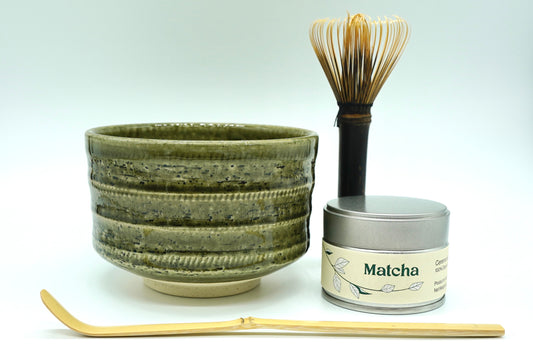
If matcha is what brought you here, a kyusu is not what you need: matcha is whisked in a bowl, not steeped, and the matcha set guide covers that kit instead.
We ship Australia-wide and worldwide, with free shipping across Australia on orders over $100.
Keep Reading
- Japanese Tea Sets: What Goes in One and How to Choose
- The Matcha Set Guide: What You Need to Start (and What Can Wait)
- Know Your Chawan: How to Choose a Japanese Matcha Bowl
- How to Make Matcha: The Ratio, the Temperature and the Technique
- All Japanese teapots and yunomi cups, shipped Australia-wide and worldwide from our Sydney studio, free Australian shipping over $100.