
Organic matcha products
First-harvest, JAS-certified organic matcha. Ships Australia-wide and worldwide.
-
Organic Japanese Matcha, Ceremonial Grade, Kyoto
Regular price From $30.00 AUDRegular price -
Organic Japanese Matcha, Ceremonial Grade, Kagoshima
Regular price From $45.00 AUDRegular price -
SEN Matcha, Organic, Ceremonial Grade, Kyoto
Regular price From $45.00 AUDRegular price -
Organic Matcha Ceremony Kit
Regular price From $162.00 AUDRegular price

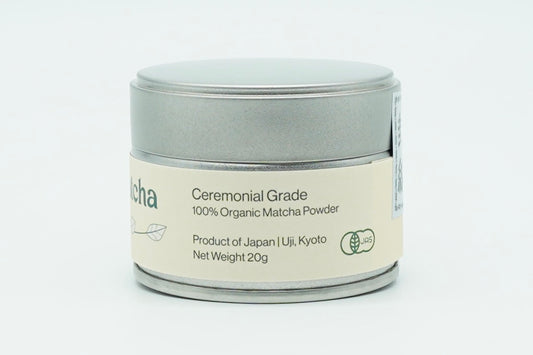

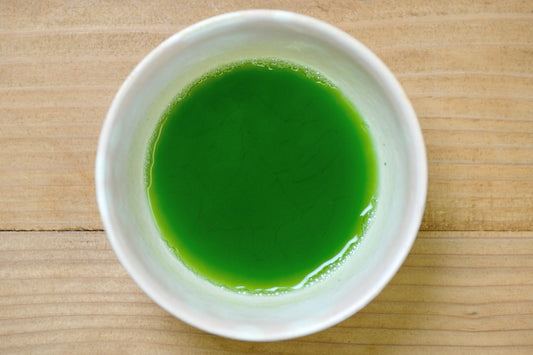

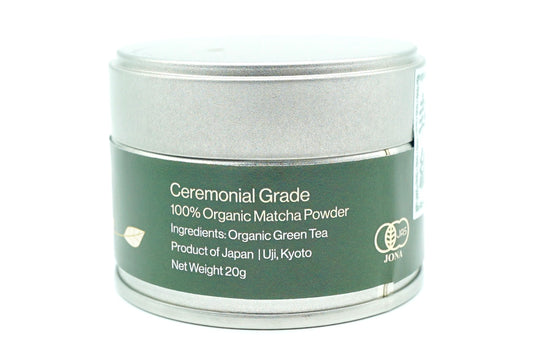

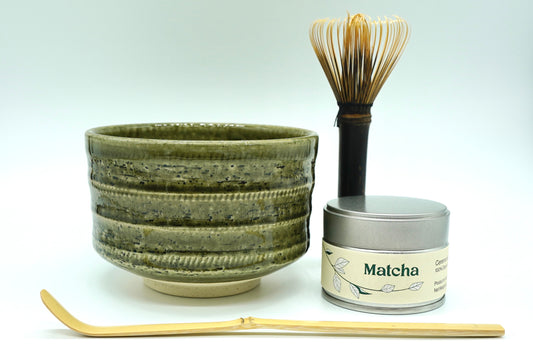
Organic ceremonial matcha, first harvest only, from Ujitawara in Kyoto and Chiran in Kagoshima, sourced directly from the farms by Taka, a Japanese Tea Instructor certified by the NPO Nihoncha Instructor Association. Every matcha here is JAS-certified organic, and we ship Australia-wide and worldwide.
Which one?
- Kyoto: our most popular matcha, for a daily bowl or a latte.
- SEN: our finest, from the top of our Kyoto grower's first harvest. The one to drink plain.
- Kagoshima: a single cultivar, Okumidori, grown on Chiran's volcanic plateau. The same first-harvest standard, with a different character.
- New to matcha? The Ceremony Kit puts matcha, a chawan, a Chikumeido chasen and a bamboo scoop in one box, for 10% less than buying them separately.
Why “first harvest” matters more than “ceremonial grade”
Ceremonial grade is not a regulated standard. Anyone can print it on a pouch, and a great deal of matcha sold under that label is made from later pickings. What the label does and does not mean is set out in our guide to ceremonial vs culinary grade matcha.
What actually separates good matcha from ordinary matcha is when the leaf was picked. The first harvest of the year, ichibancha, gives the youngest, sweetest, most delicate leaf, with the deepest umami and the least astringency. Later flushes grow coarser and more bitter, and no amount of milk or sugar hides it.
Proper ceremonial matcha should be first harvest. All three of ours are: organic, ceremonial grade, and made only from first-harvested leaves.
Taka made this point in The Guardian in August 2026: rather than trusting a grade label, look for a first-harvest one.
Organic matcha in Australia: Kyoto, SEN and Kagoshima compared
| Matcha | Kyoto matcha | SEN matcha | Kagoshima matcha |
|---|---|---|---|
| Grown in | Ujitawara, Kyoto | Ujitawara, Kyoto | Chiran, Kagoshima |
| Cultivar | Blend of cultivars | Blend of cultivars | Single cultivar, Okumidori |
| Harvest | First harvest | Top of the first harvest | First harvest |
| Organic | JAS-certified | JAS-certified | JAS-certified |
| Taste | Smooth, mellow sweetness, soft umami, minimal bitterness | Deep umami, lingering sweetness, minimal bitterness | Natural sweetness, soft umami, minimal bitterness |
| Best for | A daily bowl or a latte | Drinking on its own | Whisked tea or lattes |
| Sizes | 20g tin; 50g, 100g and 200g pouches | 20g tin; 50g, 100g and 200g pouches | 20g tin; 50g resealable pouch |
Organic matcha questions
Which organic matcha should I choose?
Choose Kyoto for a daily bowl or a latte, SEN (our finest) to drink on its own, or Kagoshima for a single-cultivar matcha with a different character.
Is all your matcha certified organic?
Yes. Every matcha at EdoMatcha is JAS-certified organic, grown without synthetic pesticides or chemical fertilisers. Only around 5% of Japan's tea production is certified organic, and we sell nothing else.
Where is your organic matcha grown?
Our Kyoto matcha and SEN are grown in Ujitawara, Kyoto. Our Kagoshima matcha is grown in Chiran, on a volcanic plateau with deep, mineral-rich soil.
How do I prepare organic matcha powder?
Sift 1.5 to 2g into a warmed bowl, add 60 to 80ml of water at 70 to 80°C, and whisk briskly in an “M” shape until a fine foam forms.
Comparing tins? Buying Matcha in Australia: A Ten-Point Checklist.
New to whisking it yourself? Our step by step method for making matcha covers the water temperature and the whisking motion, and the matcha whisk guide covers the tools.
Free shipping across Australia on orders over $100, and we ship worldwide.