What Is Matcha? A Beginner's Guide to Choosing Matcha Powder
Taka KanekoIf you've ever stood in front of a shelf of matcha tins wondering why one costs $15 and another costs $60, you're not alone. Matcha is one of the most misunderstood teas on the market, and one of the easiest to get wrong when you're buying for the first time. Here's what it actually is, and how to choose a matcha powder you'll actually enjoy.
What Is Matcha, Really?
Matcha is finely stone-ground powder made from specially grown green tea leaves. Unlike a steeped tea, where you drink water that's passed through the leaves, matcha is the whole leaf itself, whisked directly into water. That is why it tastes stronger and more vegetal than sencha or other Japanese teas, and why the quality of the leaf matters so much more.
The leaves used for matcha are shaded from direct sunlight for a period before harvest. Shading changes how the plant grows: it produces more chlorophyll and amino acids (theanine) and less bitterness, which is where matcha's deep green colour and smooth, umami-forward flavour come from. After harvest, the leaves are steamed, dried, de-stemmed, and stone-ground into the fine powder you buy.
Two Grades, Two Jobs
Matcha is sold in two broad grades. Ceremonial is made from young first-harvest leaves and is meant to be whisked with water and drunk straight (it also makes the smoothest lattes). Culinary comes from later harvests, tastes stronger and more bitter, and is made for baking and mixing. Buying the wrong one for the job is the most common reason people decide they don't like matcha. The full breakdown (what physically separates the two, why the label isn't regulated, and five checks for any tin) is in Ceremonial vs Culinary Grade Matcha: How to Tell the Difference.
What "Organic Certified" Actually Means
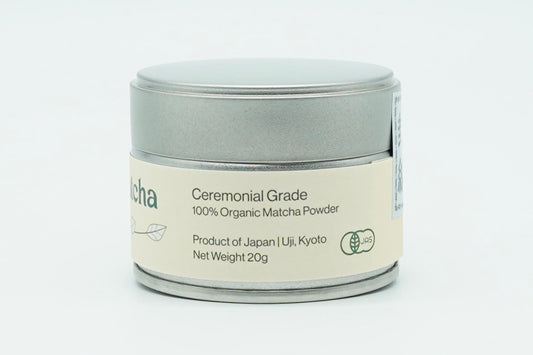
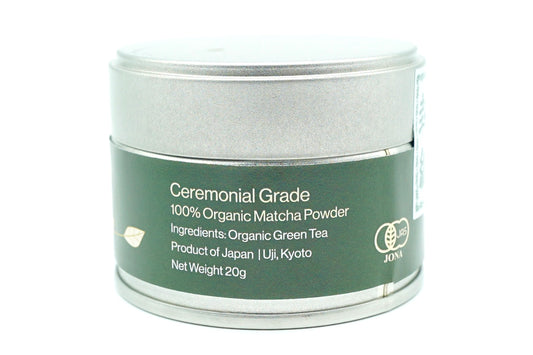
Look for a genuine third-party organic certification on the packaging, not just the word "organic" in the marketing copy. In Japan, that's JAS (Japanese Agricultural Standard) certification. It means the tea was grown without synthetic pesticides or fertilisers and verified by an independent body, not just self-declared by the seller.
How to Choose Matcha Powder: A Quick Checklist
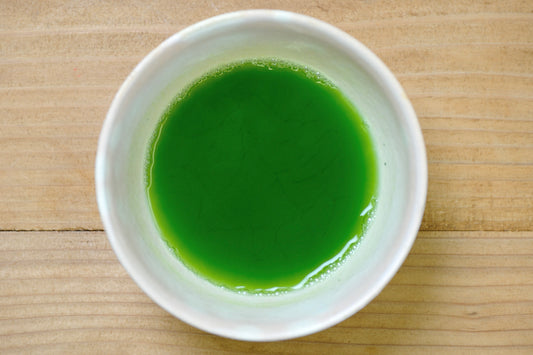
- Colour: good matcha is a vivid, almost fluorescent green. A dull, yellowish, or brownish tint usually means older stock or a lower grade.
- Grade matches your use: ceremonial for drinking straight or as a latte, culinary mainly for baking.
- Origin is stated clearly: a brand that names the actual region (not just "Japan") is usually sourcing more carefully.
- Certification, not just a claim: look for JAS or an equivalent organic mark.
- Packed for freshness: matcha oxidises quickly once opened; it should come in a resealable, light-blocking tin or pouch.
Kyoto and Kagoshima: Two Very Different Matcha
Even within Japan, region changes the flavour, because climate and cultivars differ from one growing area to the next. Kyoto matcha (Uji matcha) is known for its strong umami and mellow sweetness, carried by an elegant, deep aroma. It has very little bitterness, with a rich body and a pleasant lingering finish on the palate. It's the flavour most people picture when they think of ceremonial matcha. Kagoshima matcha comes from a warm, subtropical climate and rich natural surroundings further south, which gives it a naturally mellow sweetness, a vivid green colour, and a refreshing aroma.
Our Kyoto supplier is the first supplier EdoMatcha ever worked with. They've been producing matcha and tea for more than 50 years, and I've visited them in person three times. They are a supplier I trust completely. Uji, in Kyoto, is the birthplace of Japanese green tea.

Our Kagoshima supplier has been operating for 100 years. They started organic cultivation about 30 years ago, and the farm itself is a beautiful place: from the tea fields you can see the striking cone-shaped peak of Mt. Kaimon, also known as "Satsuma Fuji." It's a source of very high-quality matcha and tea.

How to Store Matcha
Keep it sealed, in the fridge, away from light and moisture, and use it within a few weeks of opening for the best flavour and colour. Matcha doesn't spoil the way fresh food does, but it does fade. A tin left open on the counter for a month will taste noticeably flatter than one stored properly.
Our matcha is packed in Japan, and our stock of it is stored in the fridge and freezer. At home, do what we teach in our tea workshops: squeeze the air out of the pouch, seal it, zip-bag it and put it in the fridge, one tea per bag. When you take it out, let it come to room temperature before you open it, or it sweats.
Ready to Try It?
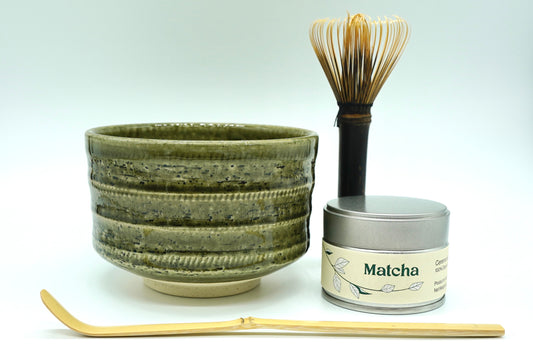
If you're new to matcha, start with a ceremonial-grade tin and a proper matcha whisk, because the technique matters as much as the tea itself. Our Matcha Set Guide explains what a starter set needs and what can wait.
Buying your first tin in Australia? Buying Matcha in Australia: A Ten-Point Checklist is the checklist.
Shop Organic Matcha | Shop Matcha Bowls | Shop Matcha Whisks