Free shipping across Australia on orders over $100. We ship worldwide.
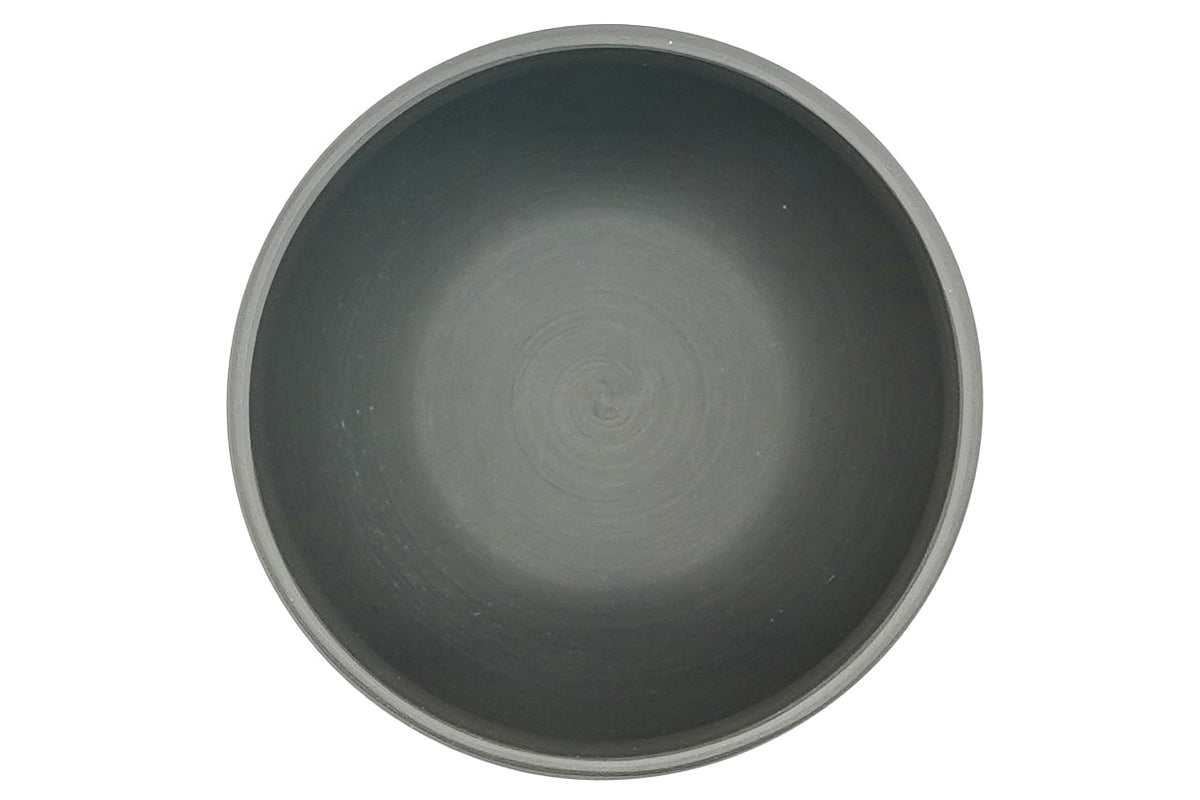
Rikyu nezumi (利休鼠), the grey with a breath of green in it, named after the tea master Sen no Rikyū. One kyusu, two cups, one colour.
The Rikyu Nezumi Japanese Tea Set is a three-piece set from the Tousen kiln (陶仙) in Tokoname: a 320 ml kyusu and two 160 ml yunomi in the same unglazed grey-green clay. Pot and lid are covered in biri, the chatter pattern Tokoname potters cut with a springing blade while the piece turns on the wheel, so the whole surface catches the light in fine ridges; each cup carries the same pattern as a band around its lower body, with a smooth rim above. Inside the kyusu sits a fine cera-mesh strainer, so even the small broken leaf of a deep-steamed sencha pours clean. The set comes in its presentation box, which makes it an easy gift for someone starting out with Japanese tea, or an upgrade for someone who already loves it.
Tokoname ware (常滑焼, Tokoname-yaki) comes from Tokoname on the Chita Peninsula in Aichi Prefecture, one of Japan's six ancient kilns, with pottery dating back to the twelfth century. It is the home of the Japanese kyusu, and its unglazed teapots are prized because the clay itself is said to soften the tannin in the tea and round off the cup.
Set includes:
1 x Rikyu Nezumi Kyusu, 320 ml, cera-mesh strainer
2 x Rikyu Nezumi Yunomi, 160 ml each, 7.5 cm across and 5.5 cm high
Presentation box
Made by the Tousen kiln in Tokoname, Aichi Prefecture, Japan.
Please note: shape, colour and capacity vary a little from piece to piece. That is the nature of handmade Japanese ceramics.
Ships Australia-wide and worldwide from our Sydney studio, with free Australian shipping on orders over $100. See the full range of Japanese tea sets.
Each piece is made by hand, so the glaze on yours will differ from the photograph. That variation is the character of the piece, not a flaw.