Japanese Tea: The Main Kinds and How Each One Is Made
Taka KanekoMost Japanese tea starts as the same green leaf. What the grower does before picking, and what the maker does in the hours after, turns it into sencha, gyokuro, matcha, hōjicha, genmaicha or Japanese black tea. This guide walks through the main kinds, how each one is made, what it tastes like in plain words, how to brew it, and which of ours it is.
It is written by Taka Kaneko, founder of EdoMatcha and one of only two Japanese Tea Instructors in Australia certified by the NPO Nihoncha Instructor Association. The general ideas are the ones we teach in our beginners' workshops. The brewing figures for each tea are the ones printed on that tea's own product page.
One Leaf, Two Questions
Two questions decide almost everything about a Japanese tea. The first is whether the field was shaded before picking. The second is what happened to the leaf after it was steamed.
Shade comes first. Tea grown in full sun, as most sencha is, tastes fresh, lively and gently sharp. Tea shaded for weeks before harvest, as gyokuro and matcha are, turns deep green and tastes sweet and savoury, with the soft, almost brothy quality Japanese tea drinkers call umami.
Steam comes second. Fresh leaf is steamed within hours of picking, and the heat stops the enzymes that would otherwise turn the leaf brown. That is why Japanese green tea stays green. China makes much of its green tea by pan-firing instead, which gives a toastier, yellower cup. Steaming gives Japanese tea its fresh, marine-sweet character.
From there the paths split. Roll and dry the steamed leaf and you have sencha. Lay it flat and dry it without rolling and you have tencha, the leaf that becomes matcha. Roast the later, larger leaves and you have hōjicha. Add toasted rice and you have genmaicha. Let the leaf oxidise instead of steaming it and you have black tea.
Sencha: Japan's Everyday Green Tea
How it is made. The leaf is steamed, rolled and shaped for hours, dried into what is called aracha, or rough tea, and then fired, sifted, cut and blended into the finished dark needles. Sencha as a kind of tea is usually grown in full sun. The steaming and rolling method was perfected in 1738 by a farmer called Nagatani Sōen in Ujitawara, Kyoto, and sencha is still Japan's everyday green tea.
What it tastes like. Fresh, bright and clean. How long the leaf is steamed changes the cup: a longer steam, called fukamushi, breaks the leaf finer and gives a cloudier, richer cup that brews quickly.
Ours. Our Organic Japanese Sencha from Chiran, Kagoshima is a first-flush, certified organic tea, picked as one bud and three leaves. The farm covers the plants for 7 to 10 days before picking, and the leaf is deep-steamed. Its page describes a bright green liquor with a smooth body, balanced sweetness and reduced astringency. Chiran sits on Kagoshima's volcanic plateau, where the soil is rich in minerals.
How to brew it. These are the farm's own figures. Put 4 g of leaf, about two heaped teaspoons, in a kyusu for each cup. Add 120 ml of water per cup, cooled to 70 to 80°C, and steep for 30 seconds. For the second and third infusions, about 10 seconds is enough, with the water a little hotter each time. The leaves give three to four infusions.
Gyokuro: The Shaded Tea
How it is made. Gyokuro is grown in the shade. The plants are screened from direct sunlight in the weeks before harvest, and the leaf is then steamed and finished like other green tea. The shade is what sets it apart.
What it tastes like. Savoury, umami-rich and deeply aromatic, with a vivid green colour and a smooth, lingering finish.
Ours. Our Organic Japanese Gyokuro from Oku-Yame, Fukuoka is a first-harvest, certified organic tea from a farm that has grown without pesticides or chemical fertilisers for over 40 years.
How to brew it. Gyokuro likes cool water. For two cups, use 8 g of leaf and 100 ml of water cooled to 50 to 60°C, and steep for 120 seconds. A yuzamashi, a small pitcher for cooling water, takes the guesswork out of the temperature. Later brews need only a short steep with slightly warmer water, and the leaf gives three or four brews in all.
Matcha: Shaded Leaf, Ground Whole
How it is made. Matcha starts as shaded tea too. After steaming, the leaf is laid flat instead of rolled and dried into tencha. Tencha is then de-stemmed, sorted and ground to a fine powder. Because you whisk that powder into water and drink all of it, you are drinking the whole leaf rather than an infusion of it.
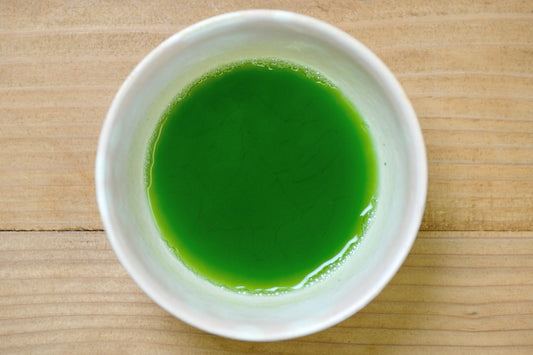
What it tastes like. A vivid green bowl with a smooth, rounded sweetness, soft umami and very little bitterness when the leaf is young and the water is not too hot.
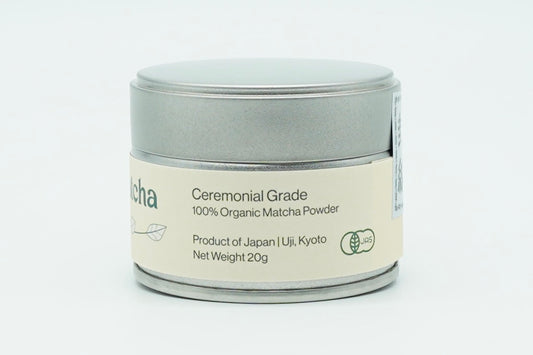
Ours. All our matcha is ceremonial grade, certified organic and first harvest. Our Organic Ceremonial Matcha from Chiran, Kagoshima is made from shade-grown tencha, with a vibrant green colour, an ultra-fine texture and natural sweetness. If matcha is new to you, What Is Matcha? covers the basics.
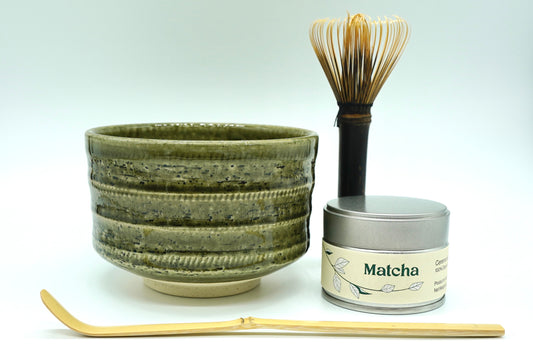
How to make it. Warm your bowl, then sift 1.5 to 2 g of matcha into it, about two chashaku scoops. Add 60 to 80 ml of water at 70 to 80°C, and whisk in an "M" shape until a fine foam forms. Boiling water scorches matcha and turns it bitter. The full method, with the common mistakes, is in How to Make Matcha.
Hōjicha: The Roasted Tea
How it is made. Hōjicha begins like any Japanese green tea: the leaf is steamed so that it stays green. It is then roasted until it turns russet-brown. The roasting is an extra step on top of the steaming, and it changes the flavour completely.
What it tastes like. The grassy notes disappear and caramel, toasted-nut and warm-wood notes take their place. The cup is amber rather than green, naturally sweet and smooth, with a clean, dry finish. In Japan it is the tea of the evening, the one the household shares after dinner.
Ours, as leaf. Our Organic Japanese Hojicha Loose Leaf from Yame, Fukuoka is warm, toasty and gently soothing, and its page describes it as naturally low in caffeine. For two cups, use 4 g of leaf and 240 ml of water, boiled and then cooled to 95 to 100°C, and steep for 30 seconds. Later brews need only a short steep, and it can be brewed two or three times.
Ours, as powder. Our Organic Japanese Hojicha Powder is made for us by our partner tea company in Ujitawara, Kyoto, from organic tea grown in Japan. The leaf is roasted and then ground to a fine powder, so, like matcha, you drink the whole leaf. For a cup, whisk 1 g (about half a teaspoon) into 100 ml of water at 90 to 100°C. Unlike matcha, it wants hot water. For a latte, whisk 2 to 4 g into a small splash of hot water and pour it over milk. Our guide to hōjicha powder goes further.
Genmaicha: Green Tea with Toasted Rice
How it is made. Genmaicha is a blend of green tea and roasted rice. The rice is toasted and combined with the leaf, so the cup carries the flavour of both.
What it tastes like. Warm, nutty and comforting. The toasted grains bring a gentle sweetness that balances the green tea's fresh, grassy notes, so it feels familiar and is easy to enjoy at any time of day.
Ours. Our Organic Japanese Genmaicha from Oku-Yame, Fukuoka is made from first-harvest organic green tea and organic roasted rice.
How to brew it. For two cups, use 4 g of tea and 240 ml of water, boiled and then cooled to 95 to 100°C, and steep for 30 seconds. Later brews need only a short steep, and it can be brewed two or three times.
Japanese Black Tea: Wakōcha
How it is made. Black tea is the odd one out, because the leaf is allowed to oxidise instead of being steamed to stop it. Wakōcha (和紅茶), Japanese black tea, is a lesser-known tradition in Japan, made from leaf that is fully oxidised.
What it tastes like. Rich yet smooth, with a gentle natural sweetness and an inviting aroma. It is a cup that is good without sugar.
Ours. Our Organic Japanese Black Tea from Chiran, Kagoshima is certified organic and made on century-old tea farms.
How to brew it. Put 6 g of leaf, about a tablespoon, in a teapot. Pour in 260 ml of water at 95 to 100°C and steep for 60 seconds. For later infusions, steep briefly and raise the water temperature slightly each time.
Which Kind to Try First
- Sencha, if you want an everyday cup that is fresh and clean.
- Gyokuro, if you like savoury, brothy flavours and have a few quiet minutes.
- Matcha, if you want a whisked bowl, or a latte at home.
- Hōjicha, if you want something warm, toasty and gentle for the evening.
- Genmaicha, if you want a comforting cup that is nutty rather than grassy.
- Japanese black tea, if you usually drink black tea and want to see how Japan makes it.
Every tea above is certified organic. One rule covers all the hot brews: bring fresh water to a full boil first, then let it cool to the temperature on the product page before it meets the leaf. A kyusu makes the leaf teas easier to pour. You can browse the whole range in our organic Japanese tea collection. We ship Australia-wide and worldwide.