Matcha Caffeine: How Much Is in Matcha, Sencha, Hōjicha and Coffee
Taka KanekoA bowl of matcha made with 2 g of powder has about 64 mg of caffeine, close to the 72 mg in a 120 ml cup of drip coffee. An 80 ml cup of sencha has about 16 mg, a 12 ml serving of gyokuro about 19 mg and a 120 ml cup of hōjicha about 24 mg. Those figures come from the official textbook of the Nihoncha Kentei, Japan's tea knowledge exam, which works them out from Japan's national food composition tables. This guide sets out the caffeine in each kind of Japanese tea, per cup and per gram, and explains why the way you brew can change the number as much as the tea you choose.
It is written by Taka Kaneko, founder of EdoMatcha and one of only two Japanese Tea Instructors in Australia certified by the NPO Nihoncha Instructor Association. Caffeine comes up at every workshop we run, and these are the figures we teach from.
The Short Answer
- Matcha: about 64 mg in a 2 g bowl. You drink the whole leaf, so all of its caffeine reaches the cup.
- Gyokuro: the most caffeine of any Japanese tea leaf, and about 19 mg in the textbook's small 12 ml serving.
- Sencha: about 16 mg in an 80 ml cup.
- Hōjicha: less caffeine in the leaf than sencha or matcha, and about 24 mg in a 120 ml cup. Lower than matcha, but not zero.
- Genmaicha: roughly half toasted rice, and rice has no caffeine, so it carries less than the same weight of plain green tea.
- Cold brew: the easiest way to a lighter cup of any of them, because caffeine dissolves poorly in cold water.
Caffeine per Cup: Japanese Tea and Coffee Compared
The table below comes from the Nihoncha Kentei textbook, edited by the NPO Nihoncha Instructor Association. Its figures are worked out from Japan's Standard Tables of Food Composition. Each one is for a single serving made the textbook's way, so the serving sizes differ.
| Tea | Made with | One serving | Caffeine |
|---|---|---|---|
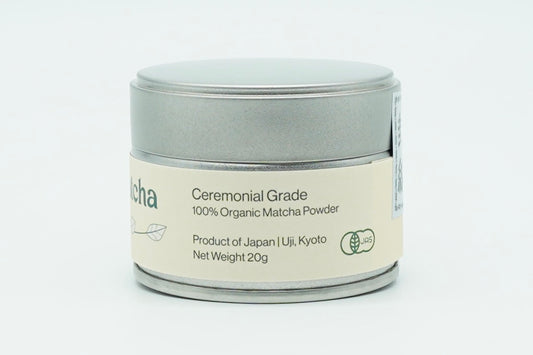
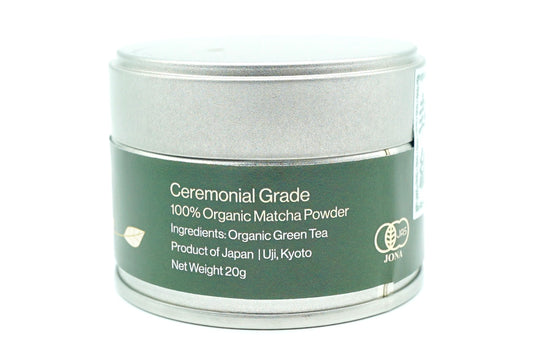
| Matcha | Powder whisked into water | 2 g of powder | about 64 mg |
| Gyokuro | 10 g of leaf, 60 ml of water | 12 ml | about 19 mg |
| Sencha | 10 g of leaf, 430 ml of water | 80 ml | about 16 mg |
| Hōjicha | 15 g of leaf, 650 ml of water | 120 ml | about 24 mg |
| Black tea | 5 g of leaf, 360 ml of water | 170 ml | about 51 mg |
| Drip coffee | 10 g of ground coffee, 150 ml of boiling water | 120 ml | about 72 mg |
Treat these as worked examples, not fixed values: the textbook itself calls its table one example, and the leaf, the harvest and the way you brew all move the number. A stronger pot makes a stronger cup.
Why Matcha Has the Most Caffeine per Cup
With matcha you drink the leaf itself, ground to a fine powder, so all of the caffeine in the powder ends up in the bowl. Steeped teas work differently. Water draws part of the caffeine out, and the rest stays behind in the leaves you throw away. In one analysis in the Japanese Tea Instructor course, brewed sencha leaves still held about 30 percent of the caffeine of the dry leaf.
Every matcha measures differently, and studies of different matcha powders have found a wide range, which our matcha benefits article sets out with its sources. By the textbook's figure, an everyday bowl of 1.5 to 2 g sits at roughly 48 to 64 mg. Our guide to how to make matcha has the full method.
Caffeine by Weight: Which Tea Leaf Holds the Most
By weight the order changes. In the composition table we teach from (Goto and colleagues, 1994, as printed in the Kentei textbook), the dry leaf holds:
| Tea | Caffeine, percent of the dry leaf |
|---|---|
| Gyokuro | 3.5 |
| Matcha | 3.3 |
| Sencha | 2.6 |
| Hōjicha | 1.8 |
Gyokuro and matcha come out on top because both are shaded before picking, and shade raises caffeine in the leaf as well as the amino acids that make these teas sweet. Japan's food composition tables give matcha 3.2 percent, and 3.2 percent of 2 g is where the 64 mg comes from.
Gyokuro: The Most Caffeine in the Leaf, Served in Small Cups
Gyokuro is made from tea kept under full shade for about three weeks before picking, and its leaf is the most caffeinated of all Japanese teas. It is brewed cool, at 50 to 60°C, so the sweet amino acids come out well while the bitter catechins stay mostly in the leaf. It is also brewed with a lot of leaf in very little water, so the infusion itself is strong, and it is drunk in small servings. In the textbook's example, 10 g of leaf in 60 ml of water, a 12 ml serving carries about 19 mg. A bigger cup carries more, so treat gyokuro as a daytime tea.
Our organic gyokuro from Yame, Fukuoka is brewed cool too: 8 g of leaf and 100 ml of water cooled to 50 to 60°C, steeped for two minutes, for two cups.
Sencha: A Moderate Cup That Depends on the Water
Sencha leaf usually holds 2 to 3 percent caffeine. How much of it reaches the cup depends on the water. In hot water caffeine dissolves almost at once. In cool water it comes out slowly, and so do the catechins that give green tea its bitterness, while the sweet, savoury amino acids still dissolve well. That is why we brew sencha at about 70°C rather than straight off the boil: the cup is sweeter, less bitter and lighter in caffeine.
In the textbook's example an 80 ml cup carries about 16 mg. Our sencha guide has the full method, and both of our organic senchas come with the farms' own brewing figures.
Hōjicha and Genmaicha: Gentler, Not Caffeine-Free
Hōjicha is green tea roasted until it turns russet-brown. Its leaf holds less caffeine than sencha's, 1.8 percent against 2.6 in the composition table, and the roast softens the bitterness. In the workshop we put it simply: the caffeine is lower than matcha, but not zero.
In the textbook's example a 120 ml cup of hōjicha carries about 24 mg, against about 64 mg in a 2 g bowl of matcha. For a lighter evening cup, brew it light: a little less leaf and a short steep. Our organic hōjicha loose leaf takes 4 g of leaf to 240 ml of water at 95 to 100°C for 30 seconds, for two cups.
With hōjicha powder you drink the whole leaf, as you do with matcha. In the composition table hōjicha leaf holds 1.8 percent caffeine against 3.3 for matcha, so gram for gram a hōjicha latte is the gentler of the two, though not caffeine-free.
Genmaicha is green tea blended roughly half and half with toasted rice. Rice has no caffeine, so the same weight of genmaicha carries less than plain green tea, and the Nihoncha Instructor Association describes it as a low-caffeine tea.
Cold Brew: The Simplest Way to Less Caffeine
Caffeine dissolves easily in hot water and poorly in cold. The sharpest catechins hardly dissolve in cold water at all, while the sweet amino acids still come out well. So tea brewed cold is naturally sweet and gentle, and lower in caffeine than the same leaf brewed hot.
The method we teach: 10 to 15 g of leaf in 1 litre of cold water, left in the fridge for 2 to 4 hours. Deep-steamed sencha shines this way, and our hōjicha and genmaicha pages give their own cold brew recipes. A filter-in bottle keeps the leaf in and pours clean, so there is iced tea on tap in the fridge door.
Matcha or Coffee?
Per serving they are close: about 64 mg in a 2 g bowl of matcha against about 72 mg in a 120 ml cup of drip coffee, in the same textbook table. A bigger coffee or a stronger bowl moves either number.
The difference people notice is the feel. Tea's caffeine arrives with theanine, the amino acid behind its sweetness and body, and the Kentei textbook describes the pair as an accelerator and a brake working at the same time. In the workshop we call it calm alertness. The research on theanine and caffeine together is in our matcha benefits article.
Timing matters too. On an empty stomach caffeine is absorbed quickly, and the textbook puts its peak in the blood at 30 minutes to an hour after drinking. With a meal it comes on more slowly: our instructor course puts the peak at one to two hours.
Which Japanese Tea to Drink When
In our workshops we match the tea to the time of day, and caffeine is a large part of why:
- Morning: hot sencha, for a bright start.
- Focused work: matcha or gyokuro.
- With and after meals: sencha or hōjicha.
- Evening: genmaicha or hōjicha, brewed light.
When to drink each Japanese tea, from the EdoMatcha channel.
How Much Caffeine Is Too Much?
The European Food Safety Authority considers habitual intakes of up to 400 mg of caffeine a day, from all sources, safe for healthy adults, and up to 200 mg a day during pregnancy. Matcha powders vary, so treat the 64 mg bowl as a guide rather than a measure. If you are pregnant, ask your doctor or midwife how much caffeine is right for you. If you take regular medication, ask your doctor or pharmacist about caffeine, because it can interact with some medicines.
Questions People Ask About Caffeine in Japanese Tea
Does matcha have more caffeine than coffee?
Per serving, about the same or a little less. A 2 g bowl of matcha has about 64 mg of caffeine; a 120 ml cup of drip coffee has about 72 mg.
Does hōjicha have less caffeine than matcha?
Yes. In the composition table hōjicha leaf holds 1.8 percent caffeine against 3.3 for matcha, and in the textbook's example a 120 ml cup of hōjicha carries about 24 mg against about 64 mg in a 2 g bowl of matcha. Lower, but not zero.
Which Japanese tea has the least caffeine?
Of the teas we sell, genmaicha, because roughly half of it is toasted rice, which has no caffeine. Brewing any tea cold, or brewing it light with less leaf and a short steep, also gives a gentler cup. In the workshop we pour genmaicha or hōjicha, brewed light, in the evening.
Is hōjicha caffeine-free?
No. Its leaf holds less caffeine than sencha or matcha, but not none. In the textbook's example a 120 ml cup of hōjicha carries about 24 mg.
Does gyokuro have more caffeine than matcha?
In the leaf, slightly: 3.5 percent against 3.3. In the textbook's example cup, far less: about 19 mg in a 12 ml serving against about 64 mg in a 2 g bowl, because gyokuro is served in tiny amounts while with matcha you drink the whole leaf. A bigger cup of gyokuro carries more.
How much caffeine is in a matcha latte?
The same as the matcha in it, because milk adds none. A latte made with 2 g of matcha has about 64 mg; one made with 4 g has about twice that.
Can I drink matcha in the evening?
If caffeine keeps you awake, drink matcha earlier in the day and switch to genmaicha or hōjicha, brewed light, in the evening. Caffeine stays with you for hours: our instructor course gives its half-life in the blood as about three hours.
Does cold brew tea have less caffeine?
Yes. Caffeine dissolves poorly in cold water, so cold-brewed tea is lower in caffeine, as well as sweeter and less bitter, than the same leaf brewed hot.
Our Japanese Teas
We sell matcha, sencha, gyokuro, hōjicha, genmaicha and Japanese black tea, and every one of them is JAS-certified organic. Browse the full organic Japanese tea range. We ship Australia-wide and worldwide.
Sources
- NPO Nihoncha Instructor Association (ed.). Nihoncha no Subete ga Wakaru Hon, revised edition, the official textbook of the Nihoncha Kentei. Nōbunkyō. Caffeine per serving, calculated from Japan's Standard Tables of Food Composition (8th revision); caffeine and water temperature; caffeine and theanine; caffeine timing.
- Goto T. et al. (1994). Chaken Report. Figures as excerpted in the textbook above, in its table of components by tea type.
- NPO Nihoncha Instructor Association. Japanese Tea Instructor course texts: genmaicha as a low-caffeine tea; caffeine left in brewed sencha leaves; caffeine timing and half-life; caffeine and medicines.
- EFSA (2015). Scientific opinion on the safety of caffeine. efsa.europa.eu